Don't Let the Measure Become the Objective: Rethinking What Exercise Is Really For
By Chin Chang, founder of TRG Flow Updated
Fitness gurus love telling us that everything we've been doing is wrong.
So here's yet another one:
Everything you know about exercise is wrong.
Well... maybe.
The truth is that there probably isn't one "right" way to exercise. The best form of exercise depends on what you're trying to accomplish.
And that's where modern fitness can sometimes lose sight of the bigger picture.
What Are We Actually Training For?
Walk into almost any modern gym and you'll see a familiar formula.
Lift weights. Run on a treadmill. Ride a stationary bike. Track your reps, sets, weight, pace, heart rate, calories, steps, body weight and body-fat percentage.
None of these things are inherently bad.
Strength training is valuable. Cardiovascular exercise is valuable. Building muscle, improving cardiovascular fitness and maintaining a healthy body composition can all contribute to better health.
The problem isn't the exercises.
It's what happens when the measurements become the objective.
A personal record is useful because it can tell us that we're getting stronger. A faster running time can tell us that our cardiovascular fitness is improving. A lower body-fat percentage can provide some information about body composition.
But these are measurements of fitness, not fitness itself.
And there is a famous principle that explains why this distinction matters.
Goodhart's Law: When the Measure Becomes the Goal
Goodhart's Law is often summarized as:
"When a measure becomes a target, it ceases to be a good measure."
The idea is simple. A measurement is useful when it reflects the outcome we actually care about. But once people are incentivized to optimize the measurement itself, they can start changing their behavior in ways that make the number look better without actually improving the underlying outcome.
One famous illustration is the so-called cobra effect.

During British colonial rule in India, the government reportedly offered a bounty for dead cobras in an effort to reduce the venomous snake population.
Initially, the program appeared to work. People killed cobras and collected the rewards. But eventually, people realized they could make more money by breeding cobras and turning them in for the bounty.
The government eventually discovered what was happening and cancelled the program.
The breeders were now left with large numbers of worthless cobras, which were released into the wild. The result was reportedly a cobra population that was worse than before.
*The historical details of the story are debated, but the underlying principle is sound:
If you optimize the measurement instead of the outcome, you can end up making the outcome worse.
And we see a similar phenomenon in fitness.
Winning the Game of the Scale

Imagine the actual objective is better health.
The scale says 180 pounds.
So a target is established: 170 pounds.
At first, the approach is sensible. Eat better. Exercise regularly. Sleep well. Reduce excess calories.
But eventually, the number itself becomes the goal.
Now the person discovers that they can make the scale drop faster by drinking less water, dehydrating themselves, restricting food excessively, taking questionable supplements or finding other ways to manipulate the number.
Congratulations. The scale says 170.
But is the person healthier? Probably not.
The measurement has stopped serving its original purpose because it is being gamed at the expense of the actual objective.
This is why it's worth asking a broader question about exercise:
Are we training to become healthier and more capable, or are we simply becoming better at producing impressive fitness metrics?
Strength Is Important. But Strength Isn't Everything.
Strength matters. Muscle matters. Cardiovascular fitness matters.
And the body does need to be challenged to adapt. Mechanical loading stimulates muscle growth and helps maintain bone strength. Cardiovascular exercise challenges the heart and circulatory system. Physical stress can drive adaptation.
But adaptation also requires recovery. More isn't automatically better.
A person can become exceptionally strong while neglecting mobility. Someone can become extremely lean while sacrificing energy and nutrition. Someone can become very good at running while repeatedly pushing through injuries.
Fitness shouldn't just be about what the body can accomplish inside a gym.
It should improve what the body can do outside of it.
Can you get down on the floor and get back up?
Can you rotate your torso comfortably?
Can you balance on one leg?
Can you reach overhead?
Can you move your joints through a healthy range of motion?
Can you coordinate your body?
Can you hike, travel, play with your children or grandchildren, participate in sports, work in the garden, or simply move through everyday life without feeling limited?
These qualities are harder to capture with a single number. But they're still fitness.

Don't Throw Science Out With the Bathwater
This isn't an argument against science.
Quite the opposite.
Science gives us extraordinary tools for understanding how the human body works. Controlled experiments, statistical analysis and rigorous research help separate genuine effects from coincidence, bias and wishful thinking.
But scientific measurements are still measurements.
Research often isolates specific variables precisely because doing so makes cause and effect easier to study. That's incredibly useful, but human beings don't live in laboratories. We live complicated lives where sleep, nutrition, stress, environment, genetics, movement, social connection and countless other factors interact.
Long-term outcomes can also be difficult to study. The longer a study runs, the more variables enter the picture, and the harder it becomes to control every factor.
That doesn't mean science is inadequate.
It means we should understand what a particular piece of evidence can, and cannot, tell us.
It also means there's value in remaining curious about practices that don't yet have a complete scientific explanation.
Traditional Knowledge Can Precede Scientific Understanding
Traditional practices are not automatically effective simply because they're old. But neither should they automatically be dismissed because the people who developed them couldn't explain the underlying mechanism.
Human beings have been experimenting with food, plants, movement and healing for thousands of years.
Sometimes they got it wrong. Sometimes they got it surprisingly right.
Consider willow bark.

For thousands of years, people used willow bark preparations to help relieve pain and fever. They obviously didn't know about salicylates, prostaglandins or cyclooxygenase enzymes.
Eventually, science identified salicin and related compounds in willow, helping lead to our modern understanding of salicylic acid and, ultimately, aspirin.
The important lesson isn't that traditional medicine is always correct. It's that:
Not understanding why something works isn't the same as proving that it doesn't work.
Science can eventually explain an observation that people discovered empirically long before the mechanism was understood.
That is a reason to remain curious, not a reason to abandon critical thinking.
The Same Principle Applies to Exercise
This mindset can be applied to many areas of fitness.
Take barefoot and minimalist footwear.
There is ongoing debate about the benefits and drawbacks of highly cushioned, supportive shoes versus minimalist footwear. There are reasonable arguments on both sides, and the right choice can depend on the individual, the activity and the circumstances.
Minimalist footwear may encourage greater foot and ankle engagement and allow the muscles of the foot to do more work. But that doesn't mean less is always better.
Someone who is standing or walking for hours may benefit from additional cushioning or support, particularly if they have specific biomechanical needs.
The point isn't to choose a side. The point is to ask:
What makes sense for this person, for this activity, and for this objective?
That's a much more useful question than trying to find a universal answer.
Rethinking What Exercise Should Look Like
This brings us back to the modern gym.
Traditional strength training is excellent for developing strength and muscle. Many exercises deliberately restrict movement and isolate particular muscles. That can be useful when the goal is to progressively overload a specific muscle group.
But everyday movement is rarely so isolated.
We walk.
We reach.
We rotate.
We shift our weight.
We stabilize.
We coordinate our arms, legs and torso.
We move through different planes.
We react to changing environments.
The body is an interconnected system, yet much of modern exercise is designed around measuring and progressively improving individual components of that system.
Again, that doesn't make traditional training bad.
It simply means there may be room for other forms of movement that train different qualities.
Where Rope Flow Fits In
This is one reason rope flow is an interesting addition to a fitness routine.

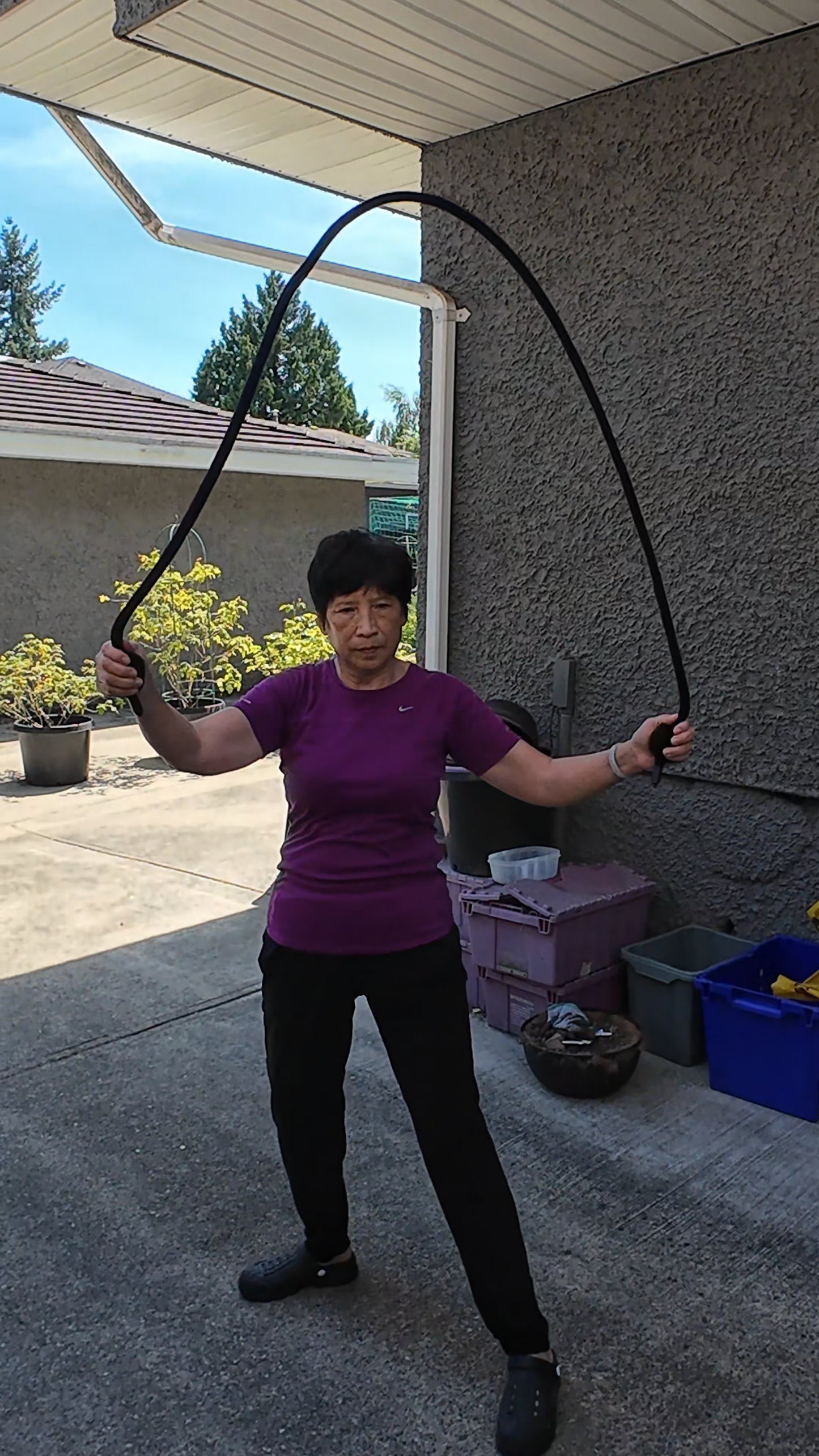
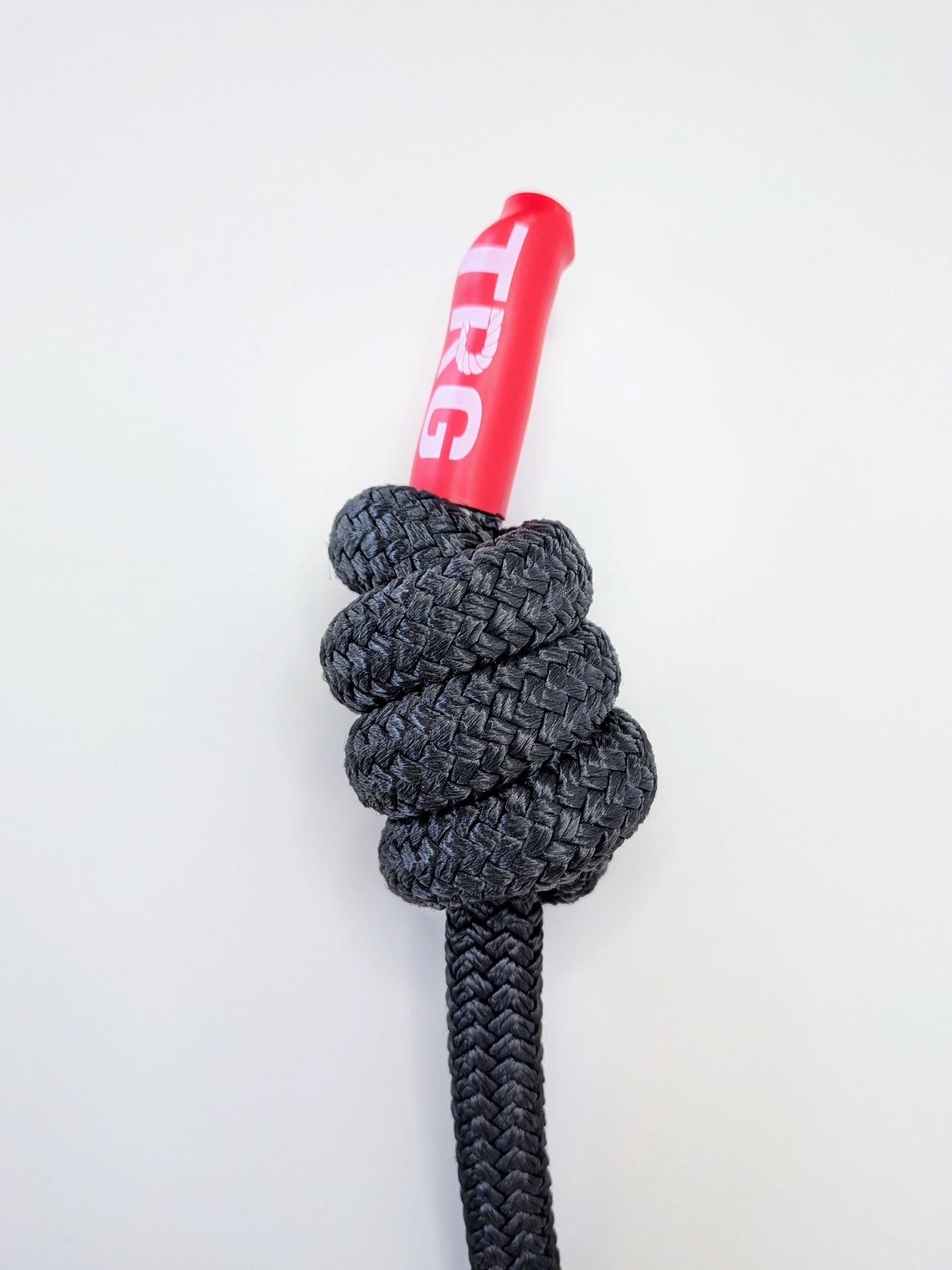
Rope flow uses a weighted rope to create continuous, dynamic movement. Rather than simply moving a weight from point A to point B, the practitioner has to manage momentum, timing, coordination, balance and body position as the rope moves around them.
The movement naturally involves the hands, shoulders, torso, hips and feet working together. It can also encourage rotation and movement through multiple planes rather than repeatedly traveling along a single path.
And unlike many forms of exercise, the intensity can be adjusted simply by changing the rope, speed and movement.
It can be challenging.
It can also be gentle.
For someone experienced, it can become a demanding workout. For someone new to exercise, it can simply be a way to become more comfortable moving. But perhaps the most important characteristic is one that doesn't show up very well on a fitness tracker:
It's fun. And that matters.
An exercise program that is theoretically perfect but miserable to perform isn't necessarily a better long-term solution than something that is slightly less optimized but enjoyable enough to do consistently.
Exercise Should Help You Live Better
There's nothing wrong with chasing personal records.
There's nothing wrong with building muscle.
There's nothing wrong with running a faster race or trying to lower your body-fat percentage.
Those can all be worthwhile goals. The problem begins when we mistake those goals for the ultimate purpose of exercise.
A number on a scale isn't your health.
A personal record isn't your fitness.
Calories burned aren't your wellbeing.
They're simply measurements. The real objective is what those measurements are supposed to represent:
A healthier, stronger, more capable body that allows you to live the life you want.
So track your progress. Use science. Set goals. Challenge yourself. But don't let the measure become the objective.
Don't just train to become better at exercising.
Train to become better at living.