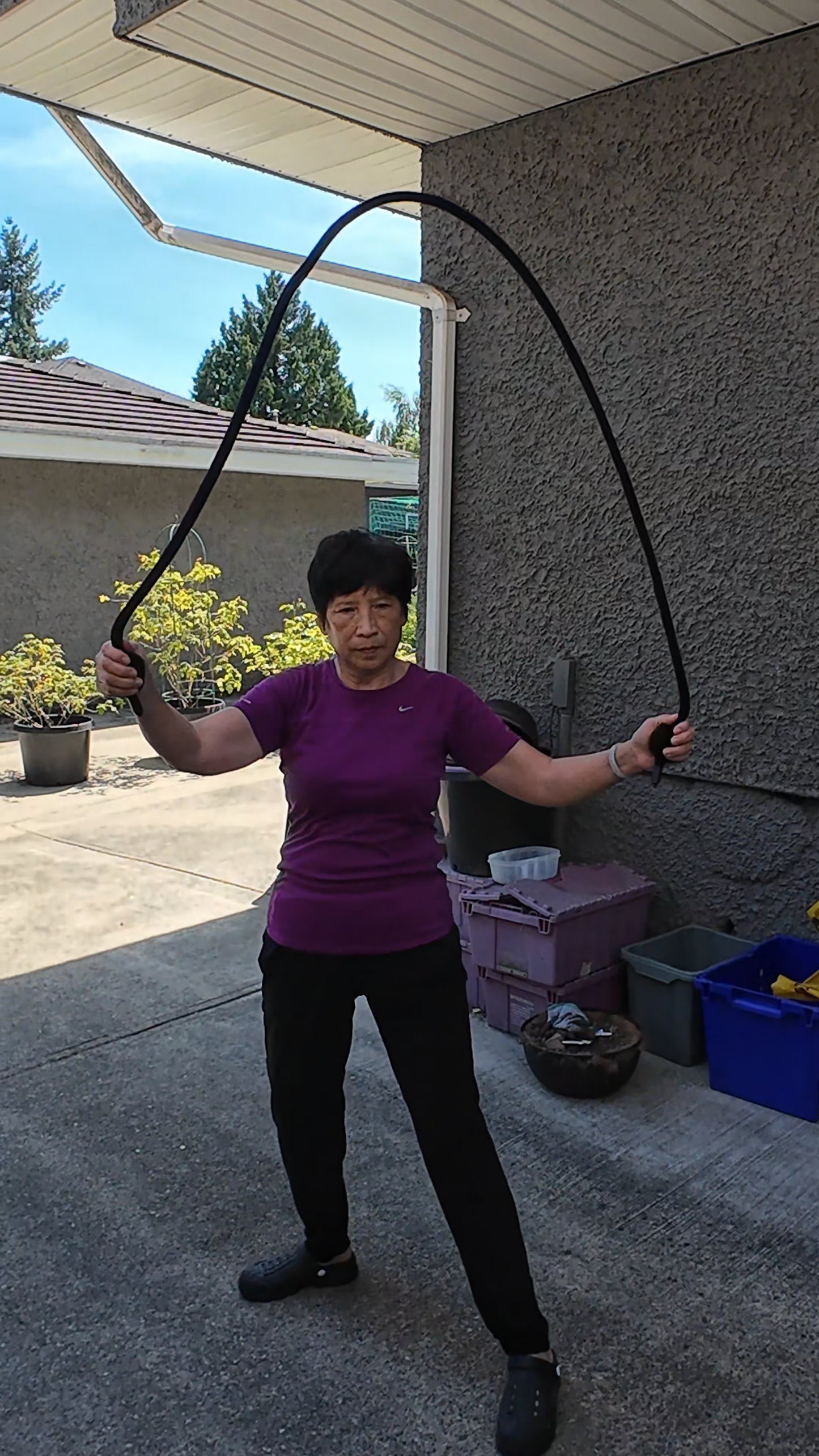
Short answer: yes, but it depends. Rope flow builds coordination, shoulder and spinal mobility, quickly, and becomes genuine conditioning once you move to a heavier rope. It will not replace strength training or the cardio you get from jump rope on its own, and results depend on consistency, like any movement practice.
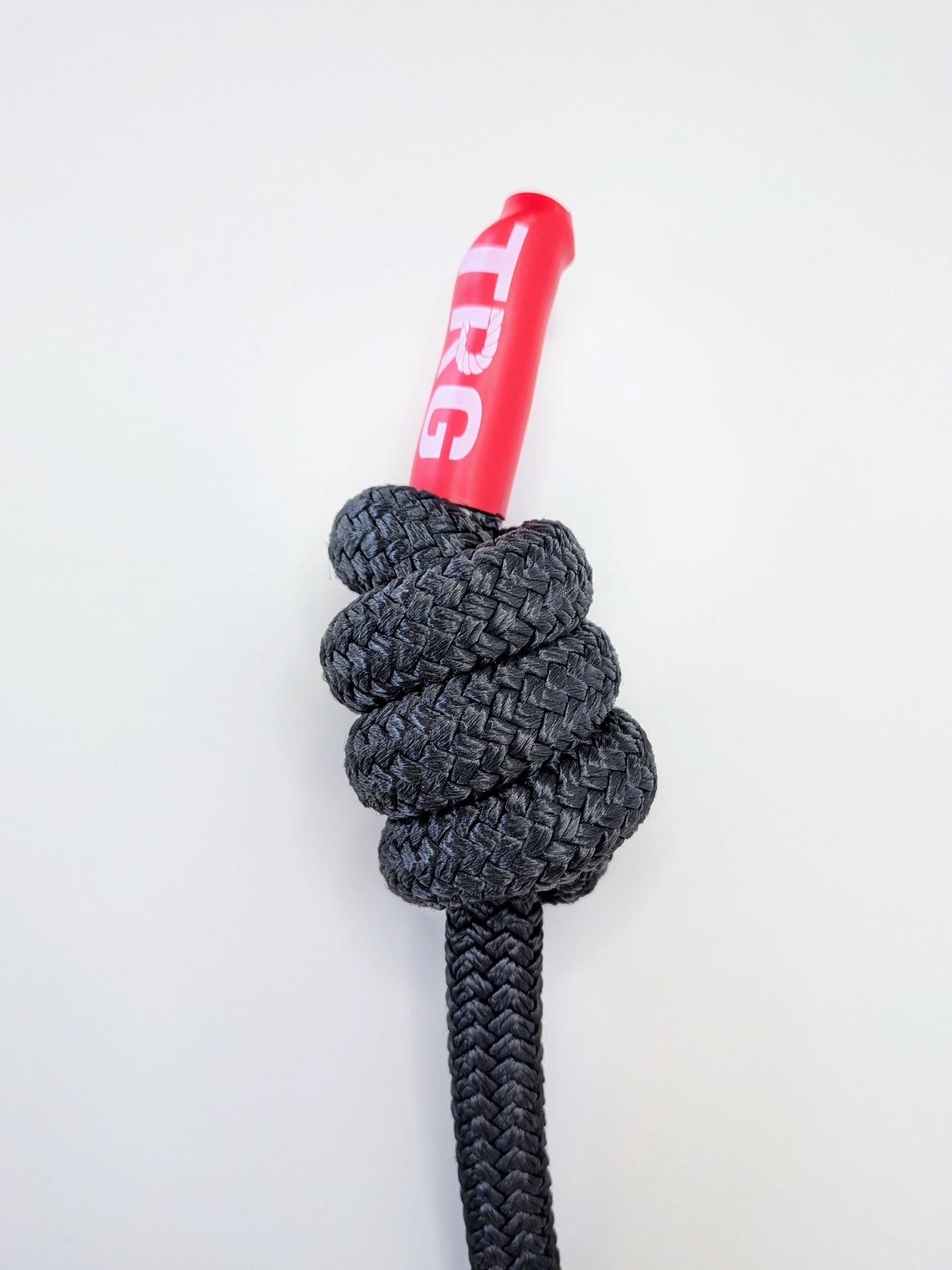
Every TRG Flow rope is handcrafted in Canada, many from upcycled search-and-rescue rope. Ready to try it? Our guide to choosing a flow rope covers weight and length by skill level.
Below, TRG Flow's owner, Chin, gives his own honest, no-hype take, including how it affected his lower back. Then we answer the specific questions people ask before starting.
Chin, owner of TRG Flow, on trying rope flow: the benefits, his early skepticism, and how it affected his lower back.
Does rope flow build muscle?
Rope flow is not a muscle-building tool the way weightlifting is. It builds grip strength, shoulder stability, and rotational core strength through repeated time under tension, and a heavier rope adds real resistance. For pure muscle mass, pair it with strength training. For functional strength and joint durability, rope flow delivers well on its own.
Is rope flow good cardio?
Yes, once you move past the learning phase. A light rope at a slow pace is closer to mobility work than cardio. A heavier rope at a faster pace, or flow combined with footwork like lunges and step patterns, raises and holds your heart rate similar to a moderate-intensity conditioning circuit.
How often should you practice?
Three to five short sessions a week, 10 to 20 minutes each, build the coordination and mobility benefits faster than one long session. Because rope flow is low-impact, it recovers quickly, so daily practice is realistic for most people.
What are the common mistakes?
The two most common mistakes are starting with a rope that is too heavy, which breaks form and slows learning. You'll end up driving the motion from your arms instead of your spine. A rope in the 13mm to 16mm range helps fix both while you learn.
Is rope flow legit?
Yes. It was developed by movement coach David Weck to train rotational power, and it has since been adopted by athletes, martial artists, physiotherapists, and everyday movers as real training, not just a trend. TRG Flow hand-makes its ropes in Canada, many from upcycled search-and-rescue rope.