How to Choose a Flow Rope: Weight, Diameter, and Skill Level (2026)
By Chin, founder of TRG Flow Updated
Share
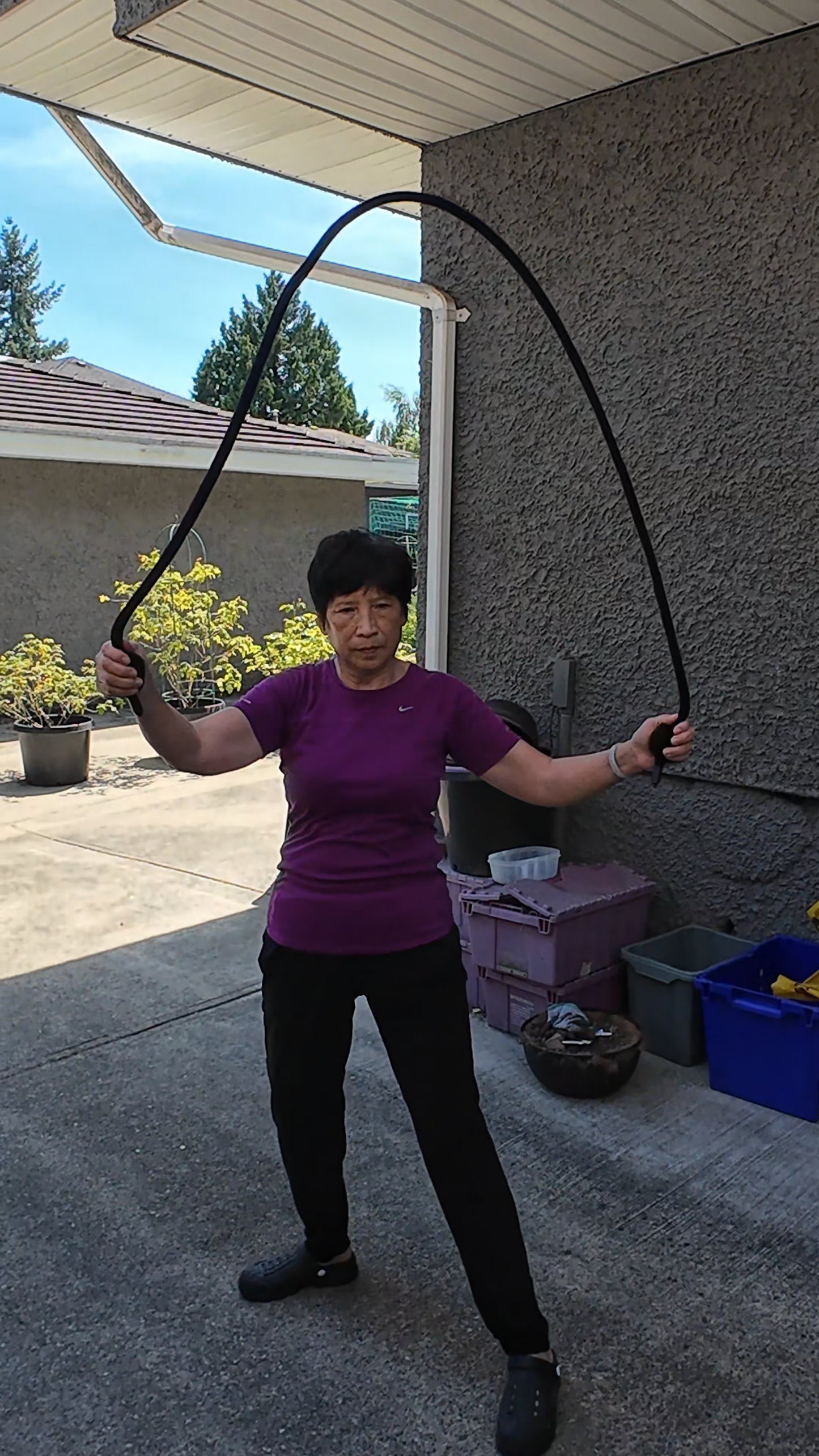
Choosing a flow rope comes down to three things: weight, diameter, and your current skill level. Get those right and the rope feels like an extension of your body. Get them wrong and you fight the rope instead of flowing with it. This guide walks you through the decision step by step, then matches a Canadian-made TRG Flow rope to each stage.
If you want the full reference charts, our Flow Rope Weight and Diameter Guide and the Choosing a Flow Rope guide have them. This post is the quick decision path you can follow in five minutes.
Step 1: Start with your skill level, not your fitness
This is the mistake almost everyone makes. They assume that because they are fit and strong, they should start with a heavier, more "serious" rope. But early on, the limiting factor in rope flow is not strength, it is coordination. Your nervous system has to learn an unfamiliar movement pattern, and a lighter rope makes that learning faster and cleaner.
Place yourself honestly:
- New to rope flow: go medium (13mm to 16mm, 300 to 700g). You are learning the movement, and a light rope forgives the mistakes you will make.
- Comfortable with the basics: add some weight (19mm to 25mm, 700g to 1kg). You can hold a continuous flow and want more feedback.
- Training for conditioning: go heavy (25mm and up, 1kg+). Your mechanics are automatic and you want resistance.
If you are not sure where you sit, default to lighter. It is far easier to outgrow a light rope than to learn on one that is too heavy.
Step 2: Match diameter to that level
Diameter and weight travel together: as a rule, the thicker the rope, the heavier and stiffer it is. But diameter also changes something subtler, which is how much the rope tells you about your timing. A thicker rope gives more feedback through your hands, which is useful once you can handle it and overwhelming before then.
This is why people progress through diameters rather than jumping straight to the thickest rope they can find. A typical path looks like 13mm, then 16mm or 19mm, then 25mm and up. The 19mm Pulse is the classic "second rope" once the 13mm Velvet starts to feel easy. Each step trains control at a new level before you add more.
Step 3: Get the weight right
Here is the trap again: it is tempting to start heavy if you are fit. But heavier ropes tire your shoulders and grip quickly, and once you fatigue, your form falls apart. You start overcompensating, the movement gets choppy, and you reinforce bad mechanics that are hard to unlearn later.
A lighter rope lets you groove clean mechanics first. As a guideline: beginners do best under 700g, most adults settle around 700g to 1kg, and conditioning work uses 1kg and up. The weight should challenge you slightly, not exhaust you in two minutes. If you cannot keep a smooth flow going for a few minutes, the rope is too heavy for where you are.
Step 4: Don't forget length
Weight and diameter get all the attention, but length matters too. A rope that is too long drags and tangles; too short and the movement feels cramped. Length is usually matched to your height. A good starting rule: folded in half, the rope should reach roughly from the floor to between your hip and belly button. An average 5ft 6in to 6ft (168-182cm) individual should go for an 7ft rope.
Our Choosing a Flow Rope guide covers exactly how to measure and adjust length, including what to do if your rope arrives slightly long.
Step 5: Consider the material
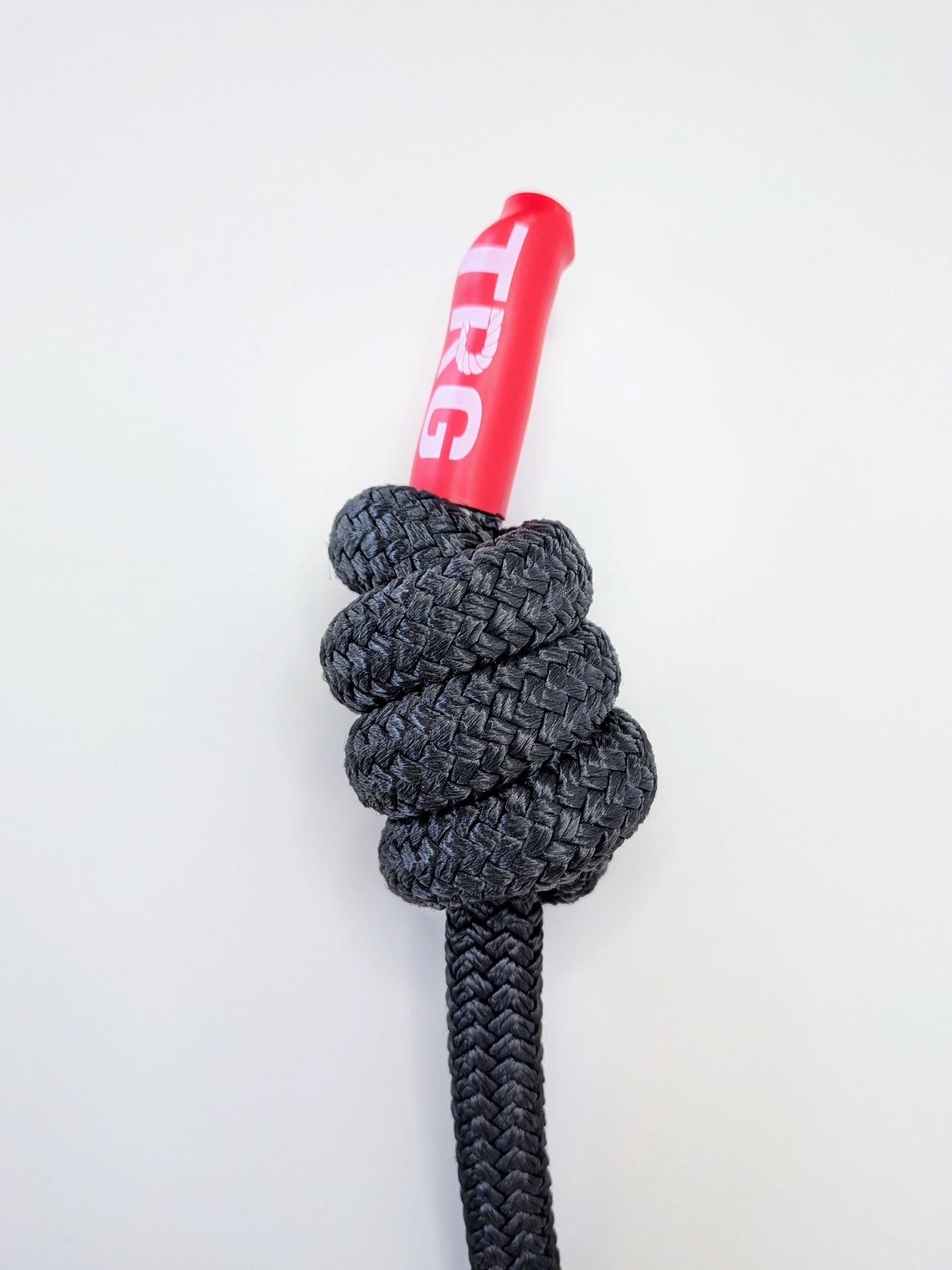
Not all rope is built for flow. A proper flow rope is weighted and finished for smooth, continuous motion, not speed like a skipping rope. TRG Flow ropes are handcrafted in Canada, many from upcycled search-and-rescue rope, a premium material rated for safety that would otherwise be retired and thrown away. The material affects how the rope feels, how long it lasts, and how smoothly it flows. Read more on the Canadian-Made Flow Ropes page.
TRG Flow picks by level
Putting it all together, here is what to buy at each stage:
- Beginner: the 13mm Velvet Rope ($70 CAD) is the most popular first rope. For the same beginner weight with a sustainability story, the Velvet Upcycled ($70 CAD) is made from rescue rope.
- Intermediate: the 19mm Pulse Rope ($110 CAD) adds feedback once the basics feel automatic.
- Conditioning: upgrade to the 29mm Obsidian ($180 CAD) as your control improves.
- Kids: the 10mm Raspberry Rush ($40 CAD) is sized and weighted for children.
The bottom line
Choosing a flow rope is not complicated once you anchor on skill level. Start lighter than you think, match diameter and weight to where you actually are, size the length to your height, and pick a rope built for flow. You can always size up later, and most practitioners end up owning two or three ropes as they progress.
Every TRG Flow rope is handcrafted in Canada, many from upcycled search-and-rescue rope. Browse the full range, compare by weight in the Light, Medium, or Heavy collections, or if you are brand new, start with Intro to Rope Flow.