What Is Rope Flow? A Beginner’s Guide to Getting Started
Share
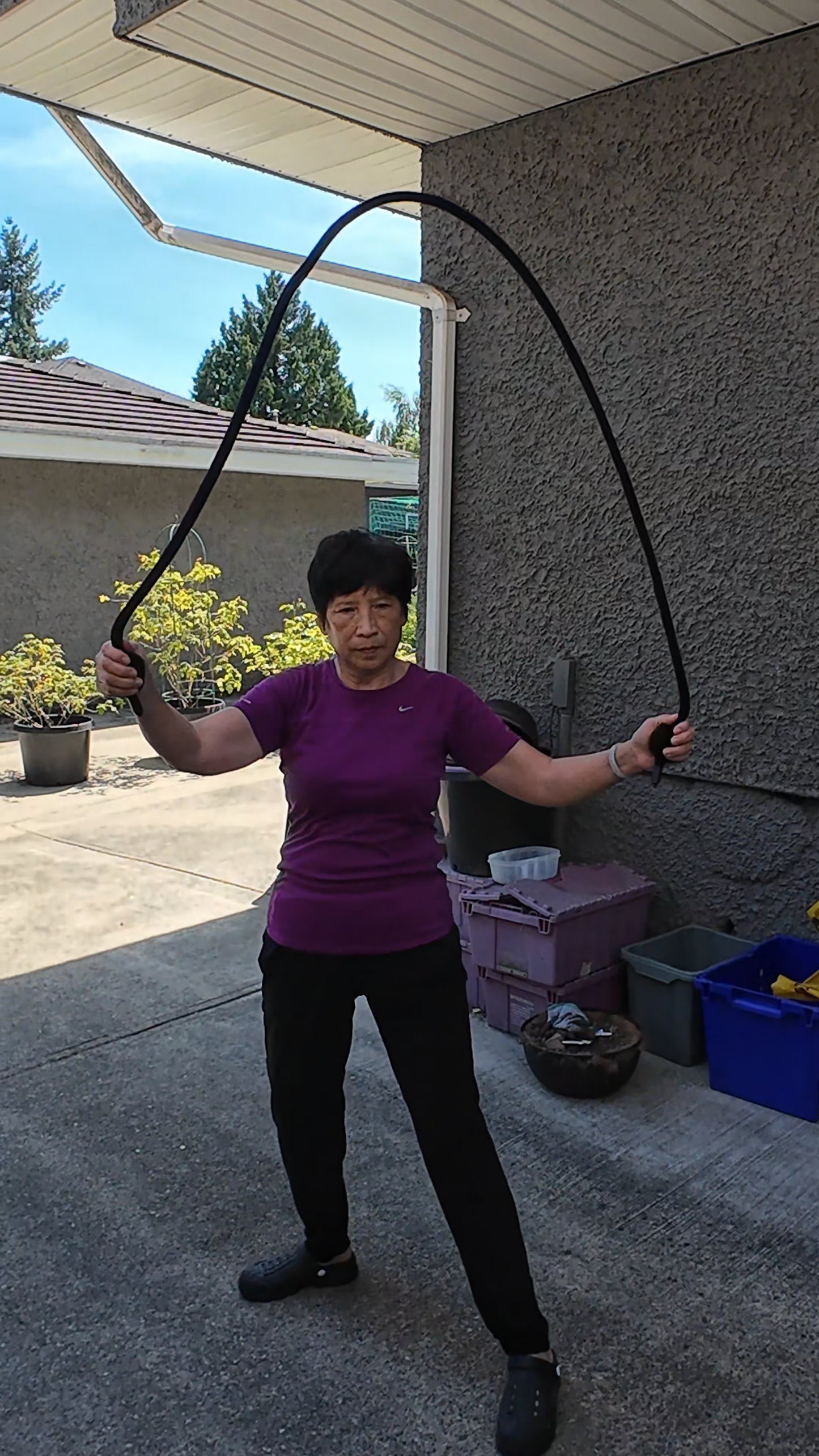
Rope flow is a movement practice that uses a weighted rope to build coordination, mobility, and rhythm. You do not jump over the rope like a skipping rope. You swing and spiral it around your body in continuous, flowing patterns driven from your hips and spine. It is low-impact, surprisingly meditative, and it scales from gentle mobility work all the way to serious conditioning.
This post is the friendly introduction. For the structured definition and benefits, see our What Is Rope Flow? guide and the original Intro to Rope Flow page.
What rope flow actually is
The easiest way to understand rope flow is by what it is not. It is not jump rope. There is no jumping, no skipping, no counting reps. Instead, you hold a single weighted rope and move it in continuous arcs and spirals around your body, your hips and spine driving the motion while your arms simply guide it. Done well, it looks almost like a dance, and it feels like one too.
Because the rope is weighted rather than fast and light, it gives you constant feedback. You feel when your timing is off and when it is smooth. That feedback loop is what makes rope flow such an effective way to train coordination and body awareness.
Where rope flow came from
Rope flow was popularized by movement coach David Weck, who developed it to train rotational power and connect the upper and lower body in a way that traditional, linear exercises miss. What started as a niche training tool has grown into a global community of athletes, martial artists, seniors, and everyday movers. Practitioners like Nsima Inyang have helped bring it to a much wider audience in recent years, and the practice continues to grow.
The benefits of rope flow
People come to rope flow for different reasons, but most stay for a combination of these:
- Coordination and timing: the rhythmic patterns train your nervous system to sequence movement smoothly, starting from how you transfer rotational force from the ground, through your legs, to your spine, and out through your arms. This carries over to almost every other physical activity - golf, tennis, swimming, running, baseball pitching, you name it, rotation is the key to generating force.
- Mobility: the swinging, spiralling patterns take your shoulders and hips through their full range of motion, loosening areas that sitting all day tightens up.
- Conditioning: with a heavier rope, flow becomes a genuine cardio, grip, and shoulder strength workout.
- Low impact: because there is no jumping, it is kind to knees and ankles, which makes it accessible to a wide range of ages and fitness levels.
- Focus: the repetitive rhythm is calming and almost meditative, which is why many people use it to decompress as much as to train.
How to take your first steps
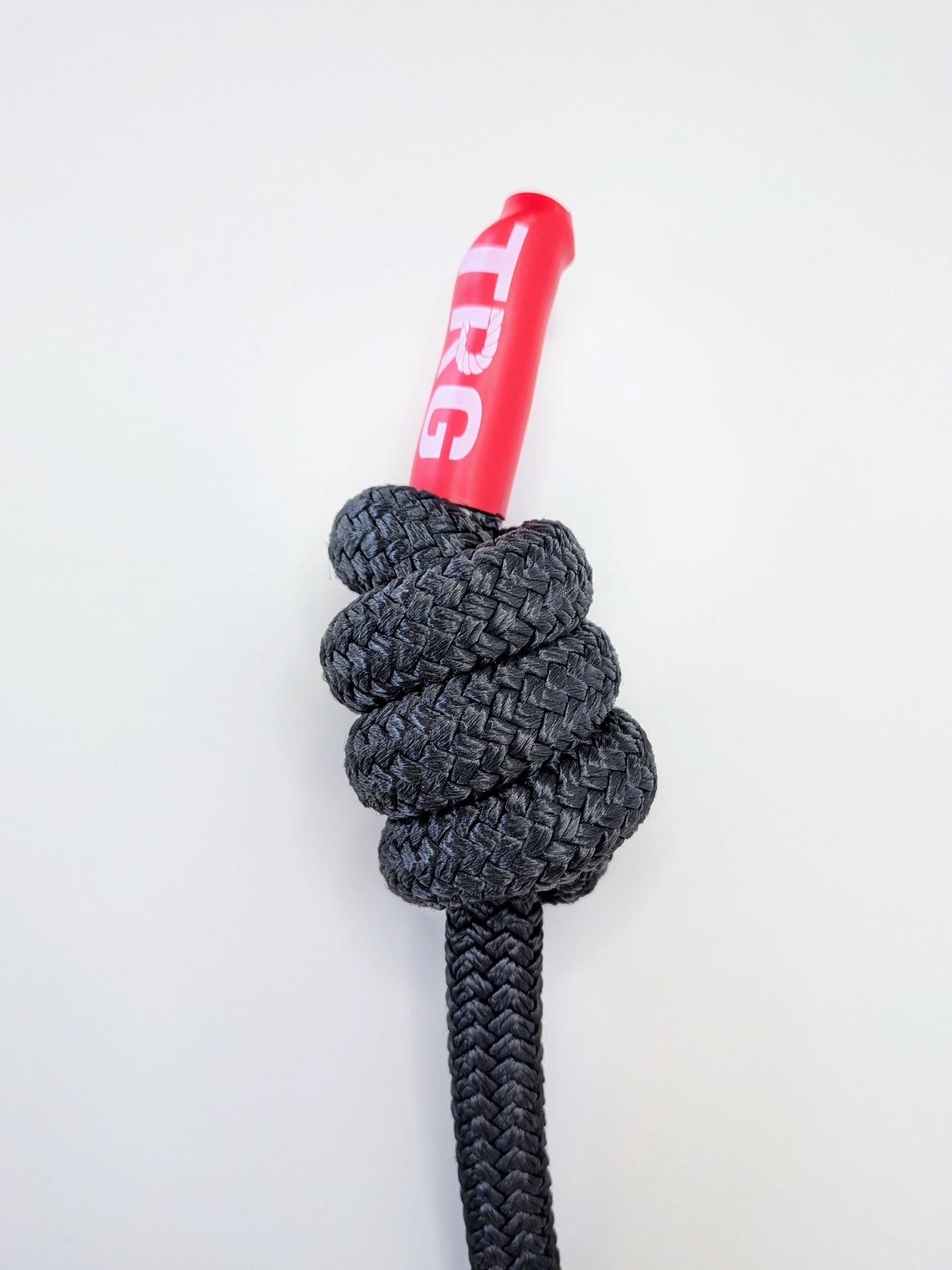
Getting started is simpler than the movements look. You need a weighted flow rope, not a skipping rope, they are too light and do not provide enough feedback. The 13mm Velvet Rope is the most popular first choice because it is a good starting weight that does not fatigue you too quickly.
From there, the learning path is short. Start with the basic figure-eight, the foundational pattern that traces a sideways 8 (or infinity symbol) in front of your body. Then practice swinging the opposite direction and with your non-dominant hand as well to train both sides evenly. Within a few sessions, most people can keep a smooth, continuous flow going. When you want more, the Flow Moves Database has 230+ moves organized by difficulty, so there is always a next step.
What rope to start with
Keep it simple: a medium 13mm to 16mm rope under 700g. A lighter rope forgives the mistakes everyone makes early on and keeps the movement smooth while your coordination catches up. The 13mm Velvet Rope is the standard recommendation. If you are buying for a child, the 10mm Raspberry Rush is sized for kids. When you are ready to choose by weight and length more precisely, our Choosing a Flow Rope guide covers everything.
Who is rope flow for?
One of the best things about rope flow is how broadly it fits. Athletes use it to build rotational power and warm up. Martial artists use it for footwork and timing. Office workers use it to undo the stiffness of sitting all day. Seniors use it as low-impact mobility work that does not stress the joints. Parents do it alongside their kids. Because you control the weight and the intensity, the same practice can be a gentle morning routine or a demanding conditioning session. There is no fitness prerequisite and no minimum age, which is rare for any form of training.
Is rope flow worth trying?
If you want a low-impact way to improve coordination, mobility, and conditioning that does not require a gym, a lot of space, or any prior skill, rope flow is hard to beat. The barrier to entry is one rope and a few square feet of floor. It rewards consistency, it is genuinely enjoyable, and it grows with you as you add heavier ropes and harder moves.
Every TRG Flow rope is handcrafted in Canada, many from upcycled search-and-rescue rope. Browse the full range to find your first rope, or learn how it is made on the about page.